



The most common interior design styles are modern, contemporary, traditional, transitional, minimalist, mid-century modern, industrial, bohemian, Scandinavian and coastal. You find yours by noticing which palette, materials and level of clutter you keep returning to, then choosing wall art in the same colors and shapes.
- Ten styles cover most homes: modern, contemporary, traditional, transitional, minimalist, mid-century modern, industrial, bohemian, Scandinavian and coastal.
- Pantone named Cloud Dancer, a warm white, its Color of the Year for 2026, the first white in the program's history.
- A piece of wall art should span about two thirds to three quarters of the furniture below it, so a 60 inch wide canvas suits an 84 inch sofa.
- The 3-5-7 rule groups decor in odd numbers, which suits a shelf or a gallery wall better than an even count.
- Most real homes blend two styles, and a shared color across furniture and art is what keeps a blend from looking random.
What Are the Main Interior Design Styles?
Ten styles come up in nearly every guide, and each one is defined by a palette, a set of materials and an attitude to empty space. Modern leans on steel, glass and concrete. Contemporary changes with the decade and favors softer edges and texture. Traditional means symmetry and dark wood, while transitional blends that warmth with cleaner lines.
The rest are easier to spot by one detail each: minimalist rooms have almost nothing on the surfaces, mid-century modern has 1950s and 1960s silhouettes in warm wood, industrial shows brick and metal ducts, bohemian layers textiles and plants, Scandinavian uses pale wood and white, and coastal uses linen, rattan and sea-washed neutrals.

| Style | Palette | Signature materials | Wall art that fits |
|---|---|---|---|
| Modern | Black, white, gray | Steel, glass, concrete | Large abstracts in two or three colors |
| Contemporary | Soft neutrals with one bold accent | Smooth wood, textured fabric | Abstract and photographic landscapes |
| Traditional | Deep reds, greens, gold | Dark wood, brass | Landscapes and botanicals in richer tones |
| Minimalist | White, beige, one muted color | Plain wood, linen | One large simple piece with generous empty wall around it |
| Mid-century modern | Mustard, teal, walnut brown | Teak, walnut, molded plastic | Sun, moon and geometric shapes |
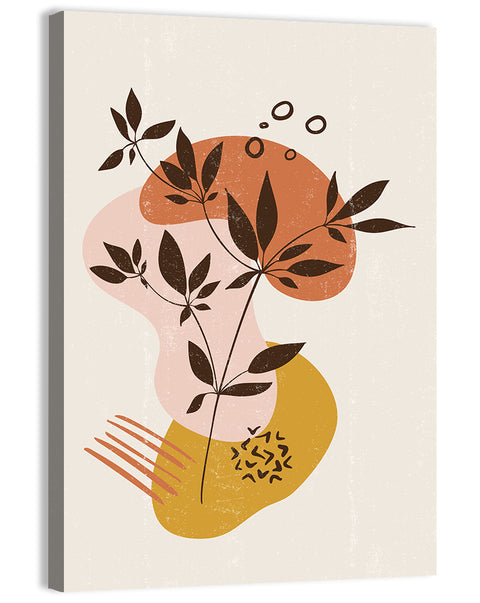
| Bohemian | Terracotta, rust, sand, plum | Rattan, jute, macrame | Arches, desert sunsets, botanical studies |
| Scandinavian | White, pale gray, soft blue | Pale oak, wool | Fjords, birch trees, quiet landscapes |
| Coastal | Sand, white, sea blue | Linen, rattan, driftwood tones | Seascapes in wide panoramic shapes |
Pro tip: Photograph your room and look for the one color that appears three times. That color, not the style name, should decide which piece of art goes on the wall.
How Do You Find Your Interior Design Style?
Start with what you already own, because your existing choices show your style more honestly than a quiz. Walk through your home and note the three things you would save from a fire, the three colors on most surfaces and whether your shelves are full or bare. Those answers usually point to one or two styles within a minute.
If the answers disagree, you are probably a blend, which is normal. A style quiz is useful as a second opinion, and "what is my interior design style" draws about 1,000 searches a month in the US, so plenty of people are asking the same thing. Our guide to interior design trends shows how those styles are shifting this year.
- Photograph the three rooms you use most, in daylight.
- List the five most common colors in those photos.
- Count the objects on one shelf: under 5 suggests minimalist, 5 to 10 suggests transitional or Scandinavian, over 10 suggests bohemian or maximalist.
- Match the colors and materials against the table above and pick the two closest rows.
- Save five images of rooms you love and check which two styles appear most.
What Interior Design Styles Are in Right Now?
Warm neutrals and mixed styles lead in 2026. Pantone chose Cloud Dancer, a warm white, as its 2026 Color of the Year, the first white in its history, and Benjamin Moore chose Silhouette, a dark espresso-charcoal. Those two picks mark the range: calm, soft rooms on one side and deep, moody rooms on the other.
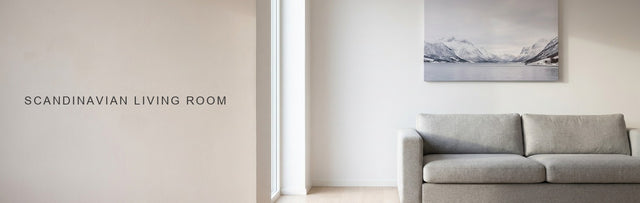
Cool gray is the color losing ground, and warm beige, greige and soft cream are taking its place. If your walls are gray today, adding art in sand, rust or olive warms the room without repainting. Our Scandinavian living room guide shows the soft end of that range in practice.

Which Wall Art Suits Boho and Minimalist Rooms?
Bohemian Rooms
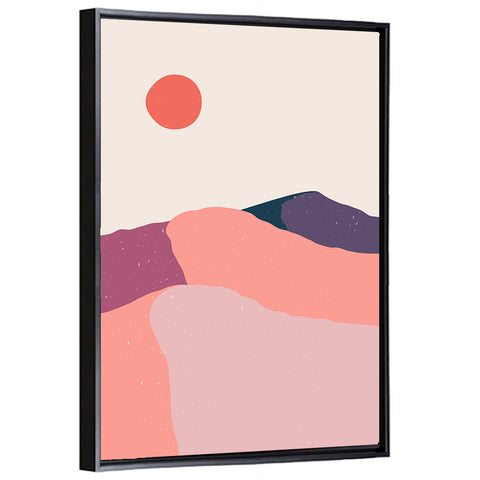
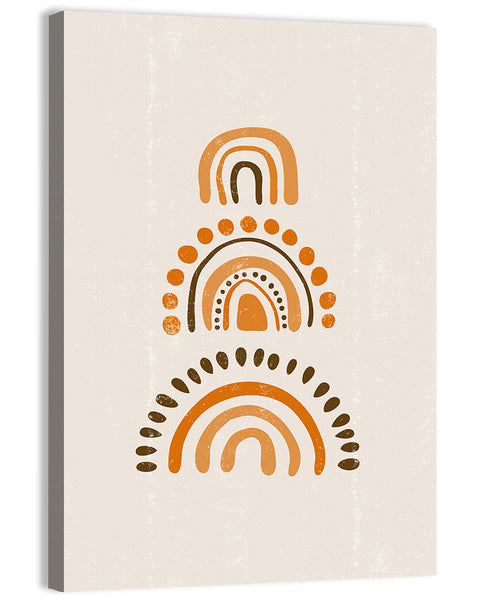
Bohemian walls want warm color and soft shapes: terracotta arches, a desert sunset, a sun with rays. A portrait canvas in a 20x40 or 24x48 inch size sits well beside a rattan chair or over a console. Our boho pictures follow that palette of rust, sand and sage.

Minimalist Rooms
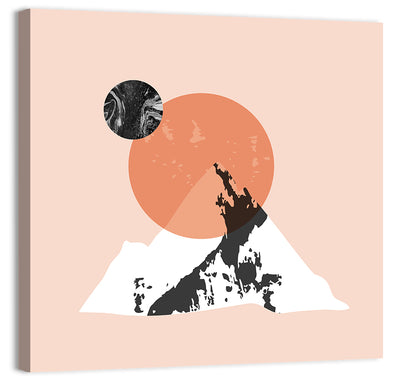
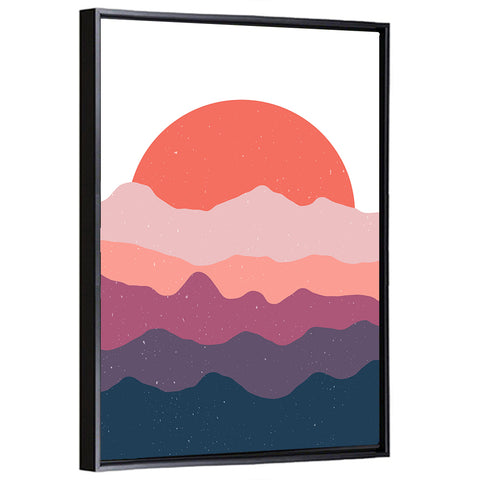
A minimalist room needs one piece and a lot of blank wall around it. Choose a single large canvas in two or three quiet colors, such as a mountain at sunset in muted tones, and leave at least 12 inches of empty wall on each side. See the minimalist wall art range for pieces that stay calm at size.

Mid-Century Modern Rooms
Mid-century rooms pair teak or walnut with graphic suns, moons and botanical lines. Choose art in mustard, teal or burnt orange, and keep the shapes simple. Our mid century wall art uses that same restrained geometry.
What Is the 3-5-7 Rule in Decorating?
The 3-5-7 rule says to group decor in odd numbers, because odd groups look balanced without looking matched. On a bookshelf that means three objects of different heights, on a coffee table five, and on a long console or mantel up to seven. A gallery wall of three to seven separate pieces follows the same idea.
The rule works with any style, but the objects change. A minimalist keeps to three, a bohemian pushes toward seven, and a coastal room mixes a shell, a glass jar and a small framed print. Space the pieces 2 to 3 inches apart on a wall so they read as one group.
Watch out: Matching every item to one style makes a room look like a showroom. Keep about 70% of the room in your main style and let the other 30% come from a second style, often through art.
How Do You Blend Two Styles Without Clashing?
Repeat one color and one shape across both styles, and the mix looks planned. A Scandinavian sofa and a bohemian rug share a room well if the rug repeats the sofa's warm gray and the art repeats the rug's rust. Japandi is a good example of a blend done well, mixing Japanese restraint with Nordic warmth.
Take an 84 inch sofa with a back height of 32 inches. Two thirds of the sofa width is 56 inches, three quarters is 63 inches, so a 60x40 inch landscape canvas fits. Hang its bottom edge 8 inches above the sofa back, at 40 inches. The top edge lands at 80 inches and the center at 60 inches, right inside the usual 57 to 60 inch eye-level range.

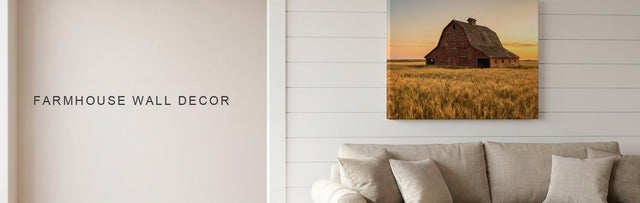
For farmhouse and coastal blends, our guides to farmhouse wall decor and coastal bedroom ideas show how each one takes on an extra layer.
Every piece is printed to order and ships free across the US. Pick the style row above that matches your room, then match the art.
Boho wall art Minimalist wall art Japandi art Coastal wall art
Quick answers
Common Questions
What are the 7 types of interior design?
The seven types most often listed are modern, contemporary, traditional, transitional, minimalist, industrial and bohemian. Longer lists add mid-century modern, Scandinavian, coastal and farmhouse. Each is defined by a palette and materials rather than by furniture brand, so you can recognize it by color and texture before you buy anything.
What is the 2026 decorating style?
The 2026 look is warm and mixed rather than one strict style. Pantone's Cloud Dancer, a soft warm white, sits at one end and Benjamin Moore's dark Silhouette at the other. Rooms combine warm neutrals, natural wood and one or two deep accent colors, with art doing much of the color work.
What is the difference between modern and contemporary design?
Modern refers to a fixed historical style with clean lines, minimal ornament and steel, glass and concrete. Contemporary describes whatever is current, so it changes over time and currently leans toward soft edges, curves, texture and warm neutrals. A modern room stays the same for decades, while a contemporary one gets updated.
What color is replacing gray?
Warm neutrals are replacing gray: beige, greige, cream and soft warm white. Pantone's 2026 Color of the Year, Cloud Dancer, is a warm white, which reflects the same move. If you keep gray walls, add art with sand, rust or olive tones to warm the room without repainting.
Can you mix interior design styles?
Yes, and most homes do. Keep about 70% of the room in one main style and take the rest from a second, then repeat one color across both. Art is the easiest way to add the second style, since a single canvas can bring a new palette without replacing any furniture.