





The best basement wall ideas start with dry walls, then add wide, horizontal art that suits a low ceiling. Fix moisture first, finish the wall with paint, panels or drywall over furring strips, and hang a panoramic or landscape canvas with its center 57 to 60 inches from the floor.
- Harvard's environmental health and safety office advises keeping indoor humidity below 60 percent, and 30 to 50 percent if possible, especially in basements.
- Under the International Residential Code, beams and ducts in a habitable basement can hang as low as 6 feet 4 inches above the floor.
- Wide panoramic canvases, 48x16 to 60x20 inches, suit low ceilings better than tall portrait pieces.
- Hang art on a finished wall or furring strips, not directly against bare concrete, so air can move behind it.
- Basement wall ideas draw about 1,000 searches a month in the US, and "inexpensive basement wall ideas" about 720.
What Are the Best Basement Wall Ideas?
The best basement wall ideas fall into three layers: a dry surface, a finish and then art. The surface is the concrete or block wall, treated for moisture. The finish is paint, panels, board and batten or drywall on furring strips. The art goes on last, on the finished wall, where it adds color and a focal point that a plain wall never will.
Skipping the first layer is the common mistake. No picture hides a damp wall, and a damp wall shortens the life of anything hung on it. Start with the checklist below, and only then choose what hangs on it.
- Clean the wall and look for water stains, white powder or peeling paint.
- Fix leaks, gutters and grading outside before any finish goes on.
- Run a dehumidifier so the room stays at 30 to 50 percent humidity.
- Choose a finish: moisture-blocking masonry paint, panels or drywall on furring strips.
- Hang art last, on the finished surface.

What Is the Cheapest Way to Cover Basement Walls?
Paint is the cheapest finish. Clean the concrete, roll on a moisture-blocking masonry paint and choose a light color such as bright white or warm gray to bounce light around a room with small windows. It costs far less than framing and drywall, and it can be redone in a weekend.
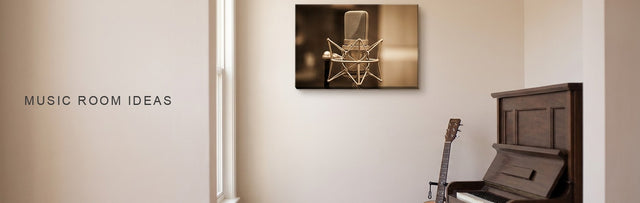
Panels cost more but cover rough walls. PVC and laminate panels, faux brick and shiplap hide uneven masonry, and basement wall panels are one of the most searched topics in this space, with about 2,900 searches a month. Board and batten adds architectural detail over a painted base. If the basement doubles as a place to play, music room ideas with acoustics and wall art covers sound treatment first.
| Finish | Best for | Moisture handling | Hanging art |
|---|---|---|---|
| Masonry paint on concrete | Lowest cost, fastest | Blocks minor dampness | Masonry anchors, light pieces |
| PVC or laminate panels | Rough or uneven walls | Resists moisture | Stud or wall anchors |
| Shiplap or board and batten | Warm, finished look | Needs a dry wall | Hang into the studs behind |
| Drywall over furring strips | Full finish, moldable | Needs a vapor barrier | Standard drywall hooks and studs |
| Faux brick or stone panels | Industrial accent wall | Varies by product | Hang on adjacent flat wall |
Watch out: Drywall installed tight against a foundation wall can trap moisture and grow mold. Install furring strips and a barrier first, as most building guides advise, and check your local code before you frame.
How Do You Keep Basement Art Safe From Humidity?
Keep the room between 30 and 50 percent relative humidity with a dehumidifier, and keep the art off any wall that feels cold or damp to the touch. Harvard's environmental health and safety office advises staying below 60 percent, and within 30 to 50 percent if possible, especially in basements. Buy a small hygrometer so you read the number rather than guess.
Hang art on finished interior walls first, and keep it away from exterior concrete. If you must use a block wall, add small rubber bumpers to the bottom corners of the frame so 1/4 inch of air circulates behind the piece. Canvas has no glass to trap damp air, so it suits a basement better than a glass-fronted frame. Keep Poster Prints for upstairs rooms.
Pro tip: Check the back of a piece after the first humid summer. A dry, clean back means the wall is fine. Spotting or a musty smell means you need more airflow or a drier wall before you hang anything else.

What Art Suits a Low Basement Ceiling?
Wide and low beats tall and narrow. A basement ceiling is often 7 to 8 feet, and ducts or beams can drop to 6 feet 4 inches, which is the minimum the International Residential Code allows for obstructions in a habitable basement. A panoramic canvas stretches the wall sideways, so the room feels longer instead of shorter. Our panoramic wall art comes from 24x8 to 60x20 inches.
Avoid pieces taller than about 36 inches in a room with a 7 foot ceiling. Keep the center at 57 to 60 inches, but let a 20 inch tall panoramic sit lower if furniture is beneath it.
A basement family room has a 7 foot 6 inch ceiling and a sectional that is 96 inches wide with its back at 34 inches. Two thirds of 96 is 64 inches, so a 60x20 inch panoramic of a city skyline fits. Hang the bottom edge 10 inches above the sofa back, at 44 inches. The top lands at 64 inches, which leaves 26 inches below the ceiling and keeps the wall from feeling cramped.

What Wall Art Works for a Basement Home Theater or Bar?
Choose art that fits what the room does. A media room suits dark, low-glare images, because bright pieces reflect the screen. A game room or bar suits sports, music and city nights. Our sports wall art, music wall art and skyline wall art cover those moods.
Home Theater
Use matte, dark-toned pieces on the side walls, never on the wall behind the screen. A tall, dark piece beside the screen frames the view, and a low panoramic above the back row works well. For the screen wall itself, our guide to decorating around a TV wall has the spacing rules.
Game Room and Bar
A stadium aerial, a golf course or a music image reads as a collection of interests. Group two or three same-size pieces in a gallery row, 2 to 3 inches apart, above a bar counter or pool table. A weights corner follows different rules, covered in home gym wall decor ideas that work.
Family Room
For a family basement, pick a skyline or a landscape in warm tones. Our guide to family room ideas covers the layout around it.

Which Colors Work in a Basement?
Warm colors lift a room with little daylight. "Warm basement colors" draws about 480 searches a month, and the usual answers are warm gray, cream and soft beige. A darker, moody route also works: charcoal, navy or forest green with warm lamps and exposed wood, the speakeasy look.
Let the art carry the color. A city at dusk in amber and blue suits a charcoal wall, while a sunlit landscape lifts a cream one. For an open basement, our framed wall art for living room and abstract art give flexible color options.

How Do You Hang Art on Concrete or Block Walls?
Use masonry screws or a hammer drill with a masonry bit, and a plastic or metal anchor rated well above the piece's weight. Mark the hole with painter's tape, drill slowly, and avoid mortar lines that crumble. Use two anchors for a wide piece so it cannot tilt.
- Mark the hanging height at 57 to 60 inches to the center.
- Drill a pilot hole into the block face, not the mortar joint.
- Insert the anchor and screw in the hook.
- Add rubber bumpers to the lower corners of the piece.
- Hang, level and check the back after a month.
Every piece is printed to order and ships free across the US. Start with the wide formats that suit a low ceiling.
Panoramic wall art Skyline wall art Sports wall art Music wall art
Quick answers
Common Questions
What is the cheapest way to cover basement walls?
Paint is the cheapest way to cover basement walls. Clean the concrete, then roll on moisture-blocking masonry paint in a light color. It costs less than panels or drywall, takes a weekend and lets you add art right away. Fix any leaks first, because paint alone will not stop real water.
What can I cover my concrete basement walls with?
Cover concrete basement walls with masonry paint, PVC or laminate panels, faux brick, shiplap or drywall on furring strips. Paint is cheapest, panels hide rough walls, and drywall gives a full finish. Whichever you choose, deal with moisture first and leave room for air to move behind the surface.
What is the best material to put on basement walls?
The best material depends on moisture. On a dry wall, drywall over furring strips with a vapor barrier gives the most finished look. On a damp or uneven wall, PVC or laminate panels resist moisture and cover rough masonry. Masonry paint suits a budget, with art hung on top.
How to make basement walls look better?
Paint the walls a light, warm color, hang one large panoramic canvas and add warm lamps. A single wide piece with its center 57 to 60 inches from the floor adds more than many small frames. Fix moisture first, because no decoration survives a wet wall.
What are the trends in basement design for 2026?
No single 2026 trend report settles this, so look at what people search. They look for warm basement colors, about 480 searches a month, and for moody dark rooms with warm lighting. Board and batten, shiplap and large panoramic art are the wall treatments that show up most often in the results.