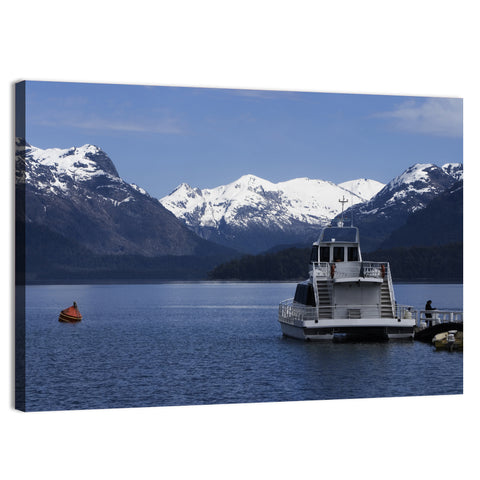





Good medical office decor uses large nature art, soft wall color and warm light to make a waiting room feel calm. Hang landscape or forest canvases in waiting areas, keep anatomical art for exam rooms, center pieces 57 to 60 inches from the floor, and choose canvas prints, which have no front cover to catch glare from bright ceiling lights.
- Roger Ulrich's 1984 study in the journal Science found that surgical patients with a view of trees had shorter postoperative stays and took fewer strong painkillers than patients facing a brick wall.
- Waiting rooms suit large landscape or forest canvases in sizes from 36x24 to 60x40 inches, seen from the seats across the room.
- Exam rooms suit smaller anatomical or diagnostic art, 16x16 to 24x16 inches, hung at seated eye level.
- Center art 57 to 60 inches from the floor, or about 48 inches above floors where patients sit in chairs or wheelchairs.
- Soft blue, sage green, warm gray and cream walls keep the focus on the art rather than on clinical white.
What Is Good Medical Office Decor?
Good medical office decor lowers the tension of a waiting room without pretending the room is something else. It combines three things: a nature image large enough to see from every seat, wall color that is warmer than clinical white, and lighting that avoids glare. Everything else is secondary.
Start with the wall patients face while they wait. A 48x32 inch landscape of a lake or forest, hung 57 to 60 inches to the center, gives the eye somewhere to go other than a phone. Add a plant or two and a warm lamp, and the room reads as cared for. "Medical office decor" draws about 320 searches a month in the US, and the questions behind it are mostly about what to hang in the waiting room.

Hospital Decoration Ideas
The strongest hospital decoration ideas put nature imagery where patients wait or recover, keep signage separate from art, and use a repeated palette so a long corridor feels planned. People search for "hospital decoration ideas", "hospital wall decor" and "wall art for hospitals", and the answers below cover each.
The best known evidence is older than the trend. In 1984, Roger Ulrich published a study in the journal Science on surgical patients in a Pennsylvania hospital. Patients whose windows faced trees recovered with shorter postoperative stays and fewer strong painkillers than patients whose windows faced a brick wall. A canvas is not a window, but it is the closest thing a corridor, imaging suite or interior waiting room can offer.
- Lobbies and waiting rooms: one large landscape per wall, 48x32 to 60x40 inches.
- Corridors: a repeating series of single canvases of the same size, spaced 36 to 48 inches apart.
- Patient rooms: one calming nature piece facing the bed, 36x24 inches.
- Staff areas: a themed piece such as a panoramic, 48x16 inches.
- Pediatric areas: friendly, bright subjects, kept above reach of small hands.
Hospitals have infection control and facility policies of their own. Check with your facilities team about which finishes are allowed in patient care and procedure areas before you order.
What Wall Painting Ideas Work for a Hospital Building?
Paint the largest surfaces in soft, low-contrast colors, and add stronger color in small zones. Soft blue, sage green, warm gray and cream are the safe palette for medical interiors, because they read as calm under the cool light of a clinic. Use one deeper accent wall, for example a muted teal behind the reception desk, to give the room an anchor.
Color can also guide patients. A different accent color for each wing or floor, repeated on the wall at each elevator landing, helps patients and visitors find the right wing without reading every sign. Pair it with simple signage in a consistent font, mounted at 60 inches to the center, and keep art on separate walls so signs never compete with images.
| Area | Wall color | Art | Size to try |
|---|---|---|---|
| Reception and lobby | Warm gray with one muted accent | Large landscape or forest | 60x40 landscape |
| Waiting room | Soft sage or pale blue | Lake, mountain or woodland | 48x32 landscape |
| Exam room | Cream or light gray | Small anatomical or botanical | 16x16 or 24x16 |
| Corridor | Light neutral, accent at each door | Repeating single canvases | 24x16 landscape |
| Staff room | Any warm tone | Panoramic skyline or field | 48x16 panoramic |
Pro tip: Tape paper cutouts at the real size on the wall before ordering. Sit in each waiting chair and check that the art is readable from there, since most people look at it from a seated position.

Which Wall Art Works Best in a Waiting Room?
Choose scenes with open space, soft light and no people: forests, lakes, mountains and slow water. These images carry no story, so they do not remind anyone of why they are there. Our nature wall art, forest wall art and water wall art are chosen for this kind of calm.
Avoid dense, high-contrast images and sharp reds near seating, which pull the eye instead of resting it. A panoramic canvas works especially well above a row of chairs, because it spans the group without hiding behind a head. Panoramic canvas comes from 24x8 to 60x20 inches.
A waiting room has a 10 foot wall with a row of four chairs, each 22 inches wide, for 88 inches of seating. Two thirds of 88 is about 59 inches, so a 60x20 inch panoramic of a lake fits. Hang the bottom edge 10 inches above the chair backs, which sit near 34 inches, so the bottom is at 44 inches and the center at 54 inches. That keeps the art tied to the seating rather than floating near the ceiling.
Which Clinic Wall Decor Suits an Exam Room?
Exam rooms are the place for specific art: spine diagrams in a chiropractic or physical therapy office, a heart in a cardiology room, a DNA helix in a lab. Patients spend minutes in these rooms and often look at the walls while waiting, so the image can inform as well as decorate. Our medical wall art covers anatomy, symbols and diagnostic imagery.
Keep the subject appropriate to the specialty and the audience. A child's pediatric room needs friendly images, while an orthopedic room can carry an X-ray style piece without causing alarm. Go small to medium here, 16x16 to 24x16 inches, since the walls are close and the viewer is seated.

Hang Art at Seated Eye Level
In rooms where patients are seated on an exam table or a chair, hang the center of the art about 48 to 54 inches from the floor, lower than the 57 to 60 inch standard for standing viewers.
How Do You Make a Hospital Display Wall?
A display wall works when the pieces are the same size and spaced evenly. Use matching canvases, 2 to 3 inches apart for a tight grid, or 36 to 48 inches apart for a corridor series. Mix in one wide piece as the anchor so the wall does not read as a row of equal rectangles.
- Measure the wall and note the door and the light switch positions.
- Pick one size, such as 24x16 inches, and decide how many pieces fit with 3 inches between them.
- Center the group so its middle sits 57 to 60 inches from the floor.
- Mark each hook with painter's tape and a level before drilling.
- Use wall anchors rated well above the piece's weight, especially near doors that open into the art.
Watch out: Hanging art in a corridor where beds, carts and wheelchairs pass invites scrapes. Keep large pieces 6 inches or more from door swings and stay above the 36 to 40 inch height where rails and carts hit the wall.

Can Staff Photos and Local Art Go on Health Practice Walls?
Yes, and they work well in the right place. A wall of staff photos in the entry introduces the team and reassures new patients, while a regional landscape in the waiting room ties the practice to its town. Keep both separate: photos near reception, calm landscapes in the waiting room.
For practices that share space with an office, our guide to office wall decor ideas shows how to size art for desks and meeting rooms. For children's waiting areas, how art shapes children's rooms covers friendly color and subject choices.

One more option for budget-limited practices is a Poster Print, the unframed poster finish with the lowest starting price. Use it in staff areas and storage corridors, and save canvas for the waiting room where people look longest. Our landscape canvas painting collection includes pieces in both finishes.
Every piece is printed to order and ships free across the US. Orders arrive in 8 to 10 business days, so order a few weeks before an opening or a renovation date.
Medical wall art Nature wall art Forest wall art Water wall art
Quick answers
Common Questions
What is the best wall art for hospitals?
Large nature scenes are the best wall art for hospitals: forests, lakes, mountains and slow water. They offer visual rest, carry no story and suit most patients. Roger Ulrich's 1984 study in Science linked tree views to shorter postoperative stays, which is why many facilities choose nature imagery for waiting rooms, corridors and patient rooms.
What colors should a medical office be painted?
Paint a medical office in soft blue, sage green, warm gray or cream. These tones feel calmer than stark white and keep the focus on the art. Add one deeper accent, such as muted teal behind reception, and keep ceilings and trim white so the room still looks clean and bright.
How high should art hang in a waiting room?
Hang waiting room art with its center 57 to 60 inches from the floor. Above a row of chairs, hang the bottom edge about 10 inches above the chair backs instead. Both rules keep the art at the eye level of people who are seated or standing, and tie it to the furniture below.
How do you decorate a clinic on a budget?
Decorate a clinic on a budget with one large canvas in the waiting room, fresh paint in a soft tone and Poster Prints for corridors and staff rooms. Spend on the one wall every patient sees, and use matching sizes elsewhere so the whole practice looks planned instead of assembled over years.
Can you put anatomical art in a waiting room?
You can, but it works better in exam rooms. Anatomical art can make anxious patients focus on their condition, so use nature scenes in the waiting room and keep spine, heart or X-ray style pieces behind the door. A chiropractic or physical therapy office is the exception, where it signals expertise.