

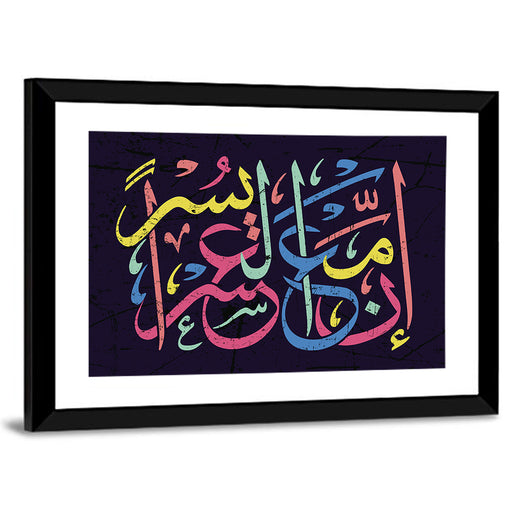
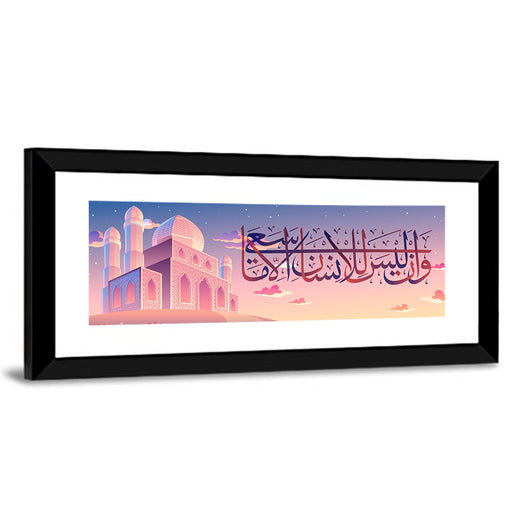


The main frame types are standard frames, gallery frames, floater frames, shadow boxes and matted frames, and the right one depends on what you are framing. Use a floater for a stretched canvas, a matted standard frame for a print or photo, and a shadow box for anything thick. Match the frame's weight to the art, not to the sofa.
- Every picture frame has three parts: the moulding, the glazing (glass or clear sheet) and the backing board.
- A floater frame leaves a gap of about a quarter inch around a stretched canvas, so the art seems to hover inside it.
- A mat of 2 to 3 inches around a print gives it room, and a 16x20 frame with a 2.5 inch mat shows an 11x15 inch picture.
- Shadow boxes run deeper than standard frames, often 1.5 inches or more, for thick or layered pieces.
- Common ready-made US sizes include 8x10, 11x14, 16x20, 18x24 and 24x36 inches.
What Are the Different Types of Picture Frames?
Picture frames fall into five working types: standard, gallery, floater, shadow box and matted. Each solves a different problem, such as holding paper behind glass, hugging a canvas edge or giving a thick object room. The names describe how the art sits in the frame, not what the frame is made of.
| Frame type | How the art sits | Best for |
|---|---|---|
| Standard frame | Behind glazing, against a backing board | Prints, photos and posters |
| Gallery frame | Thin profile, usually with a wide mat | Photography and works on paper |
| Floater frame | Stretched canvas sits inside with a small gap | Canvas art |
| Shadow box | Deep recess behind glazing | Thick or layered pieces |
| Matted frame | Paper board border between the art and the frame | Small prints that need more presence |

What Are the Basic Parts of Every Frame?
All frames share three parts: the moulding, which is the visible border; the glazing, which is the glass or clear sheet in front; and the backing board, which holds the art flat. Canvas needs none of the glazing, since a stretched canvas is not meant to sit behind a sheet. Paper prints need all three to stay flat and clean. For wood-toned mouldings, how to pair wall art with wood frames explains matching undertones.
Add-ons include a mat, hanging hardware and a dust cover on the back. The mat is the card border between the art and the frame, and it also keeps paper off the glazing so it cannot stick to it.
What Is a Floater Frame?
A floater frame holds a stretched canvas so it appears to float, with a gap of about a quarter inch between the canvas edge and the frame. The canvas sits on a ledge inside the frame rather than behind a lip, so none of the picture is covered. It suits art that continues around the edges, which is why it is the usual choice for canvas.
The frame adds a thin border, so a 24x16 inch canvas in a floater needs a frame opening a little larger than 24x16. Always order a floater by the canvas size, not the outer size you want.

What Is a Gallery Frame?
A gallery frame is a slim, clean-lined frame, usually with a wide mat and a neutral finish. The idea is to push the eye to the art and away from the border, the way a museum would hang a photograph. Thin profiles suit black and white photography, line drawings and quiet landscapes.
Pro tip: Match the frame's width to the art's visual weight. A bold, busy picture takes a slim frame, while a pale, delicate one can carry a wider frame and mat without being overpowered.
When Do You Need a Shadow Box?
Use a shadow box when the object has thickness: a flag, a ticket stub collection, a small sculpture or a canvas with a heavy edge. The recess is deeper than a standard frame, often 1.5 inches or more, so the glazing does not press against the piece. For ordinary paper prints, a shadow box is more depth than you need.

How Wide Should a Mat Be?
A mat of 2 to 3 inches suits most prints, and a wider mat of 3 to 4 inches gives small art more presence on a large wall. The mat width is added on all sides, so subtract twice the border from the frame size to find the opening. Some framers cut the bottom border slightly wider, which keeps the picture from looking like it is sliding downward.
| Frame size | Mat border | Picture opening |
|---|---|---|
| 11x14 in | 2 in | 7x10 in |
| 16x20 in | 2.5 in | 11x15 in |
| 18x24 in | 3 in | 12x18 in |
| 24x36 in | 3 in | 18x30 in |
Watch out: A mat opening should be a little smaller than the art, usually a quarter inch on each side, so the edges are held behind the board. Cut it the same size, and the picture slips and shows a white line.
You have a black and white print that is 12x18 inches and want it in an 18x24 inch frame. The mat border is 3 inches on every side, so the opening is 18 minus 6 by 24 minus 6, which is 12x18 inches. Cut that exactly and nothing holds the print, so reduce the opening to 11.5x17.5 inches, a quarter inch under on each side, and the board overlaps the paper edge.
How Do You Choose a Frame for Your Art?
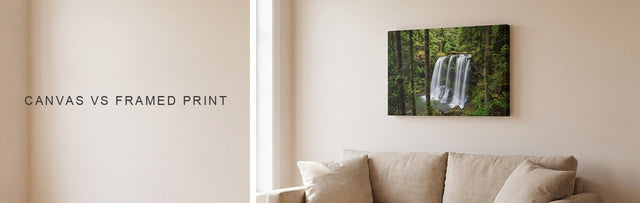
Choose by the art first, then the room. Photographs and works on paper want a matted standard or gallery frame. Canvas wants a floater or none at all. Thick pieces want a shadow box. Our comparison of canvas and framed prints explains when each finish suits a room.
- Identify the art: paper, stretched canvas or a thick object.
- Pick the type from the table: standard, gallery, floater or shadow box.
- Decide on a mat: yes for paper art, no for a canvas in a floater.
- Choose the frame width by the art's visual weight, slim for busy pictures.
- Check the final outer size against your wall with the wall art size guide, because the frame adds to the width.

Does the Frame Change How Art Looks in a Room?
Yes: a frame sets the mood before the picture does. A thin metal-style profile reads modern, a wide wood-style profile reads traditional, and ornate gilded mouldings read formal. Frame finishes in black, white, natural and gold cover most rooms, and a warm vintage scene such as our vintage wall decor suits a wider, warmer frame.
In a room with several frames, repeat one finish rather than matching every profile. Three frames in one finish with different widths looks collected, while three different finishes look accidental. Our black and white art pairs with any finish, which makes it the easiest to mix.

Every piece is printed to order and ships free across the US, and each design comes as a Canvas Print, Framed Canvas, Framed Print or Poster Print.
Framed wall art for living room Landscape canvas painting Wall art posters
Quick answers
Common Questions
How many types of frame size are there?
There is no single count, because sizes are set by the art and the maker. Common ready-made US sizes include 8x10, 11x14, 16x20, 18x24 and 24x36 inches, and framers cut custom sizes for anything else. Measure the art, add the mat border, and choose the closest size.
Which three basic parts are common to all frame types?
The three basic parts are the moulding, the glazing and the backing board. The moulding is the visible border, the glazing is the glass or clear sheet in front, and the backing board holds the art flat. Many frames also add a mat and a dust cover on the back.
What is the difference between a gallery frame and a floater frame?
A gallery frame is a slim frame that holds flat art behind glazing, often with a wide mat. A floater frame holds a stretched canvas inside it with a small gap, so the canvas edge stays visible and uncovered. Choose a gallery frame for paper and a floater for canvas.
Do canvas prints need a frame?
No. A stretched canvas is finished and ready to hang, and the sides are part of the look. A frame adds a border and a more formal feel, and a floater frame adds one without covering any of the picture. Paper prints, by contrast, need a frame to stay flat.
What is a mat and do you need one?
A mat is a card border between a print and its frame. You need one for most paper prints, because it adds visual room and keeps the paper from touching the glazing. A mat of 2 to 3 inches suits most prints, and canvas art does not need one.