




How to hang pictures without nails: use adhesive strips for light, flat-backed pieces, and a picture ledge, a tension rod or a lean for heavier ones. Clean the wall with isopropyl alcohol, press each strip for the time on the pack, and match the strip to your piece's weight. Weigh the piece first, then pick the method.
- Five nail-free methods cover almost every wall: adhesive strips, adhesive hooks, a picture ledge, a tension rod and leaning art on furniture.
- Weigh the piece on a bathroom scale before you buy strips, then compare it with the weight printed on the pack.
- Adhesive needs a clean, smooth, dry wall; textured walls, wallpaper and fresh paint are the usual reasons strips fail.
- A 60 inch picture ledge holds a 24x16 and a 16x16 piece with 3 inches between them and swaps art in seconds.
- Monkey hooks leave one pin-sized hole, so they are low damage, not no damage.
How Do You Hang Pictures Without Nails?
Choose the method by weight and wall type. Adhesive strips and hooks suit light pieces on smooth painted walls. A picture ledge, a tension rod or a lean on a console suit heavy pieces and textured walls. Each option below leaves the wall untouched or nearly so, which matters most if you rent.
| Method | Best for | Weak spot |
|---|---|---|
| Adhesive hanging strips | Light, flat-backed pieces on smooth painted walls | Textured walls, wallpaper, steamy rooms |
| Adhesive hooks | Pieces with a wire, D-ring or sawtooth hanger | Weight limit per hook |
| Picture ledge | Changing art often, mixing sizes | Needs fixing to the wall, some by adhesive |
| Tension rod | Alcoves and window recesses | Only works between two solid walls |
| Leaning on furniture | Heavy pieces, rentals with strict rules | Needs a level, stable surface |

Do Adhesive Picture Hanging Strips Really Work?
Yes, on the right wall and with the right preparation. The strips are two interlocking pieces: one sticks to the frame and one to the wall, and they lock together when pressed. Command strips are the best known, and about 590 people a month in the US search for how to use them to hang pictures.
- Weigh the piece and compare it with the weight limit printed on the pack, with a margin to spare.
- Wipe the wall spot and the back of the frame with isopropyl alcohol and let both dry fully.
- Press the strips to the back of the piece first, then peel the liners and press the piece to the wall.
- Hold firm pressure for the time on the pack, then wait the stated period before the strip carries full weight.
- Check that the piece is level before you let go; strips cannot be nudged afterward.
Watch out: Weight limits are set by the maker, and they differ by strip size and product line. Read the number on your own pack, because this guide cannot know which one you bought. When in doubt, use more strips or pick another method.

How Do You Hang a Heavy Picture Without Nails?
Do not trust adhesive with a heavy piece. Lean it on a console, a dresser or a mantel instead, or set it on a picture ledge that is fixed to the wall. A large canvas or framed print is safer resting on a surface than hanging from sticky tape, and it takes the strain off the paint.
A 48x32 or 60x40 inch piece leans well against a wall with a lamp or plant at one end to anchor it. Rest the bottom edge on a rubber or felt pad so it does not slip, and keep it away from heaters and doorways where it could be knocked.
Pro tip: Lean one large piece and add a smaller one in front of it, overlapping by 3 to 4 inches. Layering looks deliberate, and the smaller piece also helps hold the larger one steady.
How Do You Hang Art on Textured Walls?
Skip adhesive and use something that does not need the wall to be flat. Textured walls, brick, stucco and wallpaper reduce the contact area a strip needs, so it lets go weeks later. Better options are a tension rod, a leaning arrangement or a picture ledge fixed in only two places.
A press-in hook for textured walls, a type that grips with small teeth, is also a choice for light pieces, but test it on a hidden spot first. Search for these hooks is small, about 110 a month, because most people end up on a ledge or a lean.

Are Monkey Hooks a Nail-Free Option?
Not strictly. "Monkey hooks" draw about 9,900 searches a month in the US, and they are a bent wire hook pushed into drywall at an angle through a very small hole. The hole is a pinprick that a dab of spackle hides, but it is still a hole, so ask your landlord before using them in a rental.
Their rating comes from the maker's pack, which is where to check before hanging a framed canvas or a large mirror. They suit people who want no hammer and no visible nail, not people who want a perfectly untouched wall.
Can a Picture Ledge or Tension Rod Replace Hanging?
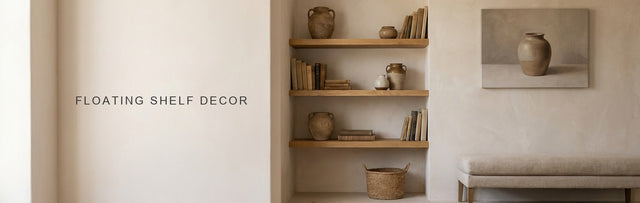
Yes, and both are easy to rearrange. A picture ledge is a narrow shelf that holds pieces upright, so changing art takes seconds and no new holes. A tension rod wedges between two walls, such as a window recess or alcove, and holds light pieces from hooks or clips. Once the ledge is up, how to style floating shelves with art shows how to arrange it.
Check how a ledge is fixed to the wall: some use screws, some use adhesive, and the pack says which. Mount a ledge so the pieces resting on it have their centers at 57 to 60 inches from the floor when you can.
You have a 60 inch ledge in a bedroom. A 24x16 inch landscape and a 16x16 inch square together take 40 inches of width. Leave 3 inches between them, which uses 43 inches, and the remaining 17 inches split into margins of 8.5 inches at each end. Mount the ledge with its top at 48 inches. The 16 inch tall pieces then span 48 to 64 inches, with centers at 56 inches, close to the 57 to 60 inch guideline.

What Are Common Picture Hanging Mistakes?
The three most common are hanging too high, trusting the wrong adhesive and skipping the wall preparation. Art placed with its center above 60 inches floats away from the room. Strips used on a glossy, dusty or fresh-painted wall peel off in days. Paint needs several weeks to cure before adhesive grips it well.
- Center the piece 57 to 60 inches from the floor, or 6 to 10 inches above furniture.
- Clean the wall and the frame back with isopropyl alcohol before pressing anything on.
- Remove strips by pulling the tab slowly straight down, parallel to the wall.
- Do not hang from strips in a bathroom or kitchen, where steam softens the adhesive.
- Check the piece after a day, then again after a week.
If you plan a group of pieces, our guide to gallery wall layout shows how to space them. Once the art is up, wall art lighting is the next step, and a battery picture light needs no wiring either.

Which Wall Art Is Easiest to Hang Without Nails?
Lighter, flatter pieces are easiest, and a poster print is the lightest finish. Our wall art posters can be framed or held on a ledge. A square canvas also hangs well from one centered hook, and square canvas prints sit evenly on a ledge. For help choosing between finishes, read our comparison of canvas and framed prints.
Every piece is printed to order and ships free across the US. Canvas prints arrive ready to hang, so you can use any method above straight away.
Quick answers
Common Questions
Can Command strips hold picture frames?
Yes, when the frame is light and flat-backed and the wall is smooth. Match the strip size and count to your piece's weight by reading the limit printed on the pack, and clean the wall first. For heavy or deep frames, textured walls or humid rooms, use a ledge or lean the piece instead.
What is the best adhesive for hanging pictures on the wall?
Removable picture hanging strips made for the job are the best adhesive, because they release cleanly when you pull the tab. Avoid glue, double-sided tape and putty for anything you want to keep, since they can pull paint away. Always follow the weight rating and wait time printed on the pack.
What is the best way to hang a heavy picture frame?
Rest it on something solid rather than hanging it from adhesive. Lean it on a console, dresser or mantel, or set it on a ledge fixed to the wall. A rubber pad under the bottom edge stops it sliding, and a lamp or plant at one side keeps it from tipping.
What are some tips for hanging things on textured walls?
Avoid adhesive, because texture cuts the contact area. Use a picture ledge, a tension rod or a lean on furniture, and test any press-in hook on a hidden spot first. If you must use a strip, choose a smooth patch and press it for the full time on the pack.
How do you hang pictures without nails in a rental?
Use removable strips, a leaning arrangement or a freestanding ledge, and check your lease first. Clean the wall before applying anything, and remove strips by pulling the tab slowly parallel to the wall. This keeps paint on the wall and your deposit intact.